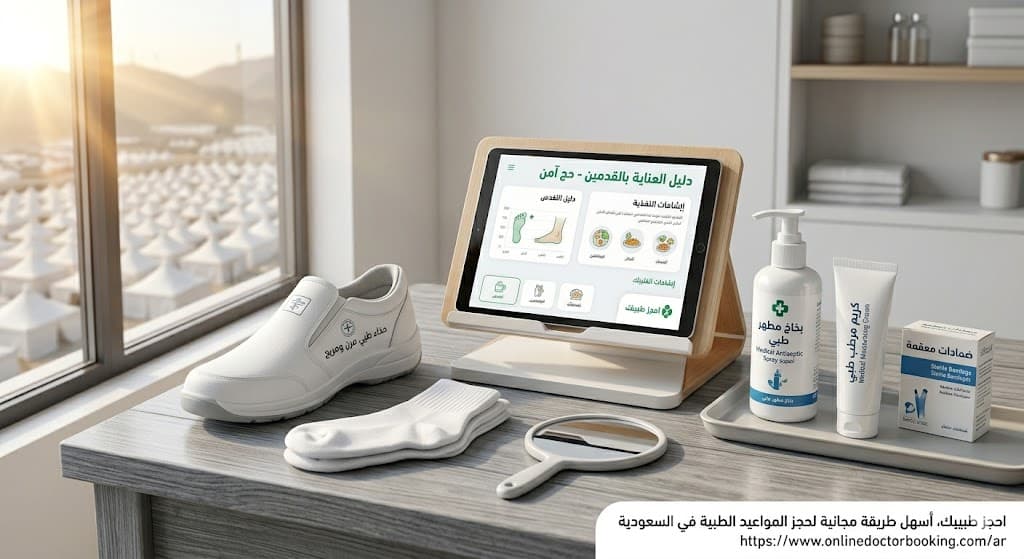
Foot Care During Hajj: Clinical Guidelines for Preventing Wounds and Complications of Long-Distance Walking
Learn clinical strategies to shield your feet from blisters and infections during Hajj rituals, featuring customized precautions for diabetic individuals to secure a risk-free pilgrimage.
Performing Hajj rituals, including Tawaf, Sa'ee, and traveling between the holy sites, demands walking long distances that impose significant physical and muscular strain. This continuous exertion places persistent pressure on the feet, leaving them highly vulnerable to skin ulcerations, friction blisters, and bacterial infections—clinical complications that can severely hinder a pilgrim's capacity to complete their spiritual journey, particularly those managing diabetes or peripheral vascular disorders.
1. Criteria for Selecting Orthopedic Shoes and Appropriate Socks
External protection serves as the foundational milestone for preserving footwear safety. Family physicians and vascular specialists strongly advise wearing well-fitted orthopedic shoes that are wide, cushioned, flexible, and closed-toe to shield the digits, avoiding brand-new, unworn shoes to eliminate severe friction. Additionally, wearing soft, breathable white cotton socks—which allow immediate detection of any bleeding or discharge—and changing them routinely maintains dry skin and prevents fungal proliferation.
2. Daily Inspection and Preventive Moisture Management
Daily foot inspection is an mandatory preventive behavior for every pilgrim, especially diabetic individuals who may suffer from peripheral neuropathy and reduced sensory awareness. Feet must be washed daily with lukewarm water and a gentle cleanser, then dried with meticulous care, particularly between the toes. Applying a specialized medical moisturizer to dry heels and calluses is highly recommended, while strictly avoiding the interdigital spaces to prevent moisture buildup that fosters fungal infections. Utilizing a small mirror helps inspect the soles for hidden abrasions or erythema.
3. Rapid Medical Management of Friction Blisters and Lesions
In the event of friction blisters or active skin irritation, clinical experts strictly warn against popping or draining them manually to prevent severe bacterial secondary infections. The affected area should be cleansed with a topical antiseptic, shielded with a sterile dressing, and ventilated as much as possible. If the pilgrim is diabetic, they must report to the nearest medical mission or field health center immediately to receive specialized wound tracking and avert severe tissue complications.
Mindful daily tracking of your foot safety and adhering to simple preventive protocols guarantees a comfortable, clinically stable, and spiritually fulfilling Hajj pilgrimage.
Need personalized clinical advice on how to secure foot safety and optimize your health profile before Hajj begins?
Book the Best Family Medicine or Vascular Specialist for Free via the Platform