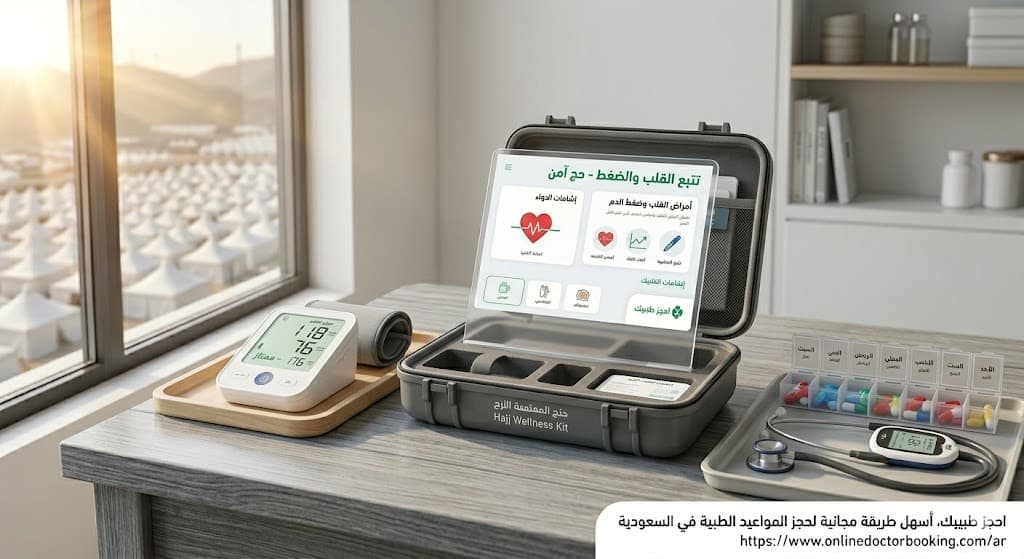
Hypertension and Heart Patients During Hajj: Clinical Guidelines for Medication Management and Preventing Physical Exertion Risks
A comprehensive medical guide by Online Doctor Booking to help hypertensive and cardiac pilgrims navigate Hajj safely, detailing medication tracking and coping mechanisms against physical strain.
Performing Hajj rituals requires exceptional physical and muscular mobility, which naturally elevates the heart rate and places additional workload on the cardiovascular system. This physical exertion, compounded by crowded environments and high ambient temperatures, presents a distinct health challenge for pilgrims with hypertension or pre-existing cardiac conditions, making individual preventive awareness crucial for completing their spiritual journey safely.
1. Medication Adherence and Travel Storage Protocols
Strict compliance with the scheduled timing of anti-hypertensive and cardiac medications is the primary clinical threshold for preventing sudden blood pressure spikes or myocardial strain. Pilgrims are highly advised to store an adequate supply of their prescribed therapies in their personal hand luggage to remain accessible at all times. Keeping medications in their original moisture-resistant packaging protects them from direct heat exposure across the holy sites.
2. Electrolyte Balance and Fluid Replenishment
Profuse sweating and subsequent fluid loss trigger electrolyte imbalances that can compromise cardiovascular stability. Family medicine and cardiology specialists emphasize regular fluid tracking to stave off dehydration. Pilgrims must strictly avoid high-sodium foods, such as processed items or heavily salted ready-to-eat meals often distributed during travel, opting instead for potassium-rich fresh fruits to maintain optimal vascular resistance and stable blood pressure readings.
3. Managing Cardiovascular Strain and Recognizing Red Flags
Hypertensive pilgrims should minimize physical activity during peak heat intervals, utilizing available religious concessions—such as proxy stone throwing or utilizing wheelchairs during Tawaf and Sa'ee—if physical fatigue sets in. In the event of clinical red flags such as sharp chest pain, acute shortness of breath, severe dizziness, or a sudden occipital headache, pilgrims must immediately cease all exertion and report to the nearest medical post or field clinic immediately.
Adhering to your pre-established medical protocol and mindfully listening to your body's cardiovascular signals guarantees a blessed, secure, and spiritually serene Hajj performance.
Preparing for Hajj and seeking specialist advice on how to regulate your cardiac medications and blood pressure during the journey?
Book the Best Family Medicine or Cardiologist for Free Now via the Platform